-
Dental Bonding / Composite FillingsDental Bonding / Composite Fillings -
Dental BridgesDental Bridges -
Dental CrownsDental Crowns -
Dental SealantsDental Sealants -
Dental VeneersDental Veneers -
InvisalignInvisalign -
Oral Surgery & ImplantsOral Surgery & Implants -
Periodontal Disease and TreatmentPeriodontal Disease and Treatment -
PulpotomyPulpotomy -
Root Canal TherapyRoot Canal Therapy -
Sedation Dentistry & Dental AnxietySedation Dentistry & Dental Anxiety -
Snore GuardsSnore Guards -
Teeth WhiteningTeeth Whitening -
Three Dimensional Dental ImagingThree Dimensional Dental Imaging -

TMJ TherapyTMJ Therapy
A cracked, worn, or heavily filled tooth may not have enough healthy structure to support another filling. Biting pressure can place the remaining tooth at risk of further damage, while visible changes may affect the appearance of your smile. A dental crown covers the portion of the tooth above the gumline to rebuild its shape, strength, and function.
Adams & Cheek Dentistry provides dental crowns in Raleigh, NC, for damaged natural teeth, teeth that have undergone root canal therapy, dental implants, and other restorative needs.
Before & After Crown Photos
Here are some examples of recent work we completed for a current patient. These images include before and after photos of the work. The images are placed over one another to better represent the improvement after completion.
To view the images properly, slide your mouse over the image to reveal the before and after comparison.

What Is a Dental Crown?
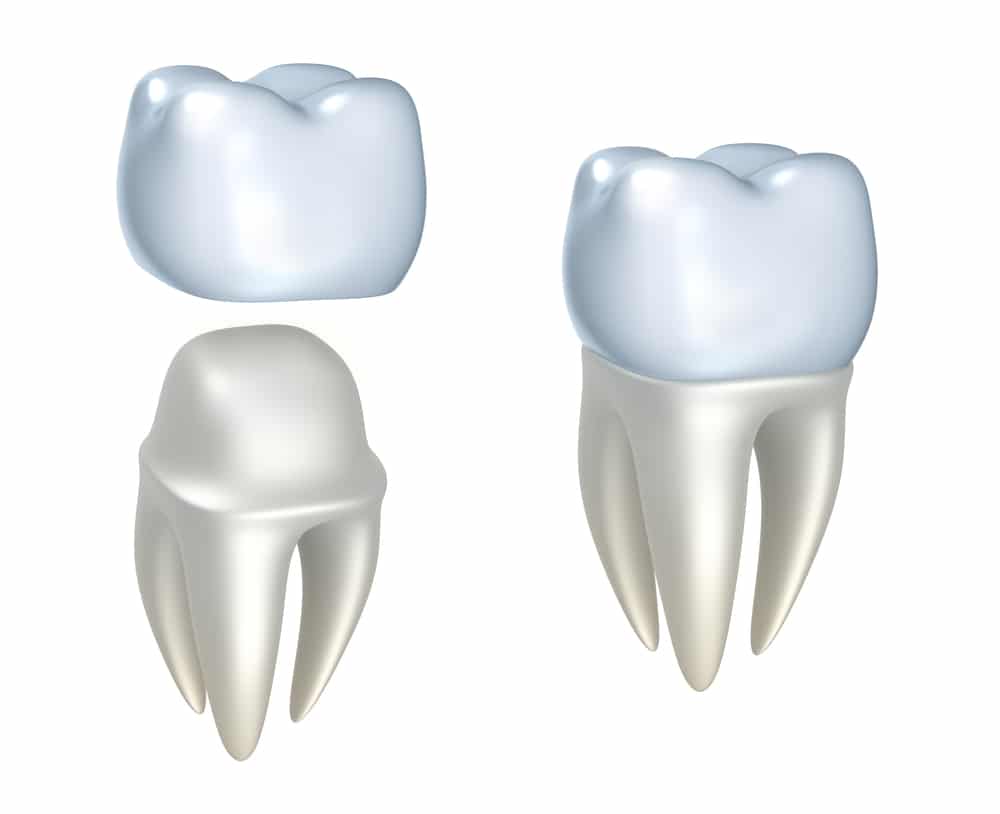
A dental crown is a tooth-shaped covering placed over the visible portion of a natural tooth. It may also attach to a dental implant to replace a missing tooth. Each crown is designed to resemble the size and shape of a tooth while providing a stable surface for biting and chewing.
A dentist may recommend a crown to:
- Rebuild a broken, cracked, or severely worn tooth
- Strengthen a tooth with a large filling
- Protect a tooth weakened by extensive decay
- Restore a tooth after root canal therapy
- Improve the shape or color of a tooth
- Support a dental bridge
- Complete a dental implant
Before recommending a crown, the dentist examines the tooth and determines whether a more conservative restoration can provide adequate support.
Types of Dental Crowns
Crowns can serve different purposes depending on whether they cover a natural tooth, attach to an implant, or form part of another restoration.
Restorative Crowns
A restorative crown covers a natural tooth weakened by decay, a crack, wear, or a large filling. It rebuilds the tooth’s shape and distributes pressure across its biting surface. This type of crown may be recommended when the remaining structure cannot reliably support another filling.
Crowns After Root Canal Therapy
A tooth that has undergone root canal therapy may have lost structure because of decay, damage, or the opening created during the procedure. A crown is often recommended for a back tooth because molars and premolars experience considerable chewing pressure.
Implant Crowns
An implant crown replaces the visible part of a missing tooth. It connects to a dental implant through a component called an abutment. Unlike a crown placed over a natural tooth, an implant crown receives support from the implant in the jawbone.
Crowns Supporting a Dental Bridge
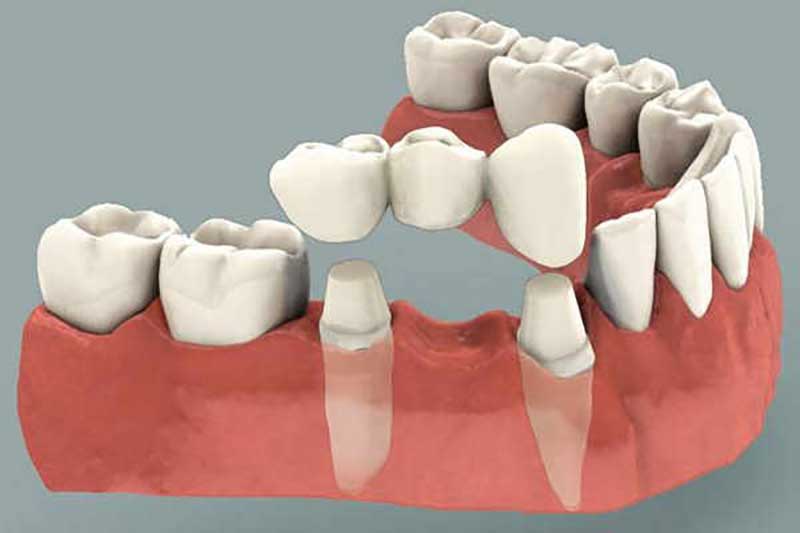
A traditional bridge replaces a missing tooth by connecting an artificial tooth to crowns on either side of the gap. These crowns fit over neighboring natural teeth and hold the bridge in place.
Cosmetic Crowns
A crown may be considered when extensive discoloration, damage, or an irregular shape affects most of the visible tooth. Because it covers the entire visible portion of the tooth, a crown can make broader changes than dental bonding or a veneer.
What Crown Materials Are Available?
Adams & Cheek Dentistry offers all-ceramic crowns as an option for restoring teeth and improving cosmetic appearance. Ceramic can be shaped and shaded to coordinate with surrounding teeth, making it useful in visible areas of the smile.
The practice works with a dental laboratory located in the same building. This allows the dentists and laboratory team to collaborate on the crown’s shape, fit, customization, and shade matching.
The selection of a crown depends on:
- The location of the tooth
- The amount of biting pressure placed on it
- The condition of the remaining structure
- The color and shape of nearby teeth
- Whether the crown covers a tooth or attaches to an implant
- The patient’s functional and appearance goals
Your dentist will explain which crown design may be suitable after examining the tooth and bite.

What Happens During the Dental Crown Procedure?
Crown placement generally involves examination, tooth preparation, impressions, and final placement. The process varies depending on whether the crown covers a natural tooth or attaches to an implant.
Examination and Planning
The dentist examines the tooth, gums, and bite. Dental X-rays may be taken to assess the roots, surrounding bone, and areas beneath an existing filling. If the tooth has extensive decay, a crack, or symptoms involving the pulp, it may require additional care before crown preparation.
Preparing the Tooth
Local anesthesia numbs the tooth and surrounding gums. The dentist clears decayed or weakened areas and reshapes the tooth so the crown can fit over it. If a considerable structure is missing, a foundation may be placed to support the crown.
Impressions and Shade Selection
An impression or digital scan records the prepared tooth, surrounding teeth, and bite. These records help the dental laboratory create a crown that fits the available space. For an all-ceramic crown, the dentist also selects a shade that matches the color of the surrounding teeth.
Temporary Crown
A temporary crown may protect the prepared tooth while the final crown is being made. Avoid hard or sticky foods that could loosen or damage it. Brush normally but slide floss out from the side rather than pulling it upward around the temporary crown.
Final Crown Placement
At the final appointment, the dentist takes off the temporary crown and evaluates the new crown’s fit, shape, shade, and bite. After any needed adjustments, the crown is bonded or cemented in place.
The crown may feel unfamiliar at first. Contact the dental office if your bite feels uneven or if the tooth remains uncomfortable.
Dental Crown vs. Filling
A filling repairs a smaller area of decay or damage while preserving more of the natural tooth. Filling material is placed within the prepared area rather than covering the entire visible surface.
A dentist may recommend a crown to cover and support a tooth when damage has weakened a large portion of its structure. It provides broader support when a filling alone may not withstand biting pressure.
The choice depends on the size and location of the damage, the amount of healthy structure remaining, and the forces placed on the tooth. A filling may be suitable for a smaller cavity, while a crown may be considered for a cracked tooth or one with a large existing filling.
Dental Crown vs. Veneer
Crowns and veneers can both change a tooth’s appearance, but they cover different amounts of tooth structure. A crown surrounds the visible portion and can provide both structural support and cosmetic improvement.
A veneer covers mainly the front surface and is generally used for appearance concerns affecting an otherwise healthy tooth. It may require less tooth preparation but does not provide the same structural support as a crown.
A crown may be considered when a tooth is weakened, extensively filled, cracked, or damaged. A veneer may be considered when the main concerns involve color, size, shape, or minor visible imperfections.

How Long Do Dental Crowns Last?
Dental crowns typically remain functional for 5 to 15 years, although longevity varies. The supporting tooth, crown location, biting pressure, oral hygiene, and daily habits can all affect how long a crown remains in place.
A crown may need to be replaced if it becomes loose, cracked, or worn. Decay can also develop at the edge of the crown where it meets the natural tooth. Regular examinations allow the dental team to monitor the crown and supporting structures for changes.
How to Care for a Dental Crown
A crowned tooth requires the same daily care as your natural teeth. Although the crown itself cannot develop decay, the underlying tooth remains vulnerable near the crown margin.
To care for your crown:
- Brush twice daily with fluoride toothpaste.
- Floss around the crowned tooth every day.
- Clean carefully along the gumline.
- Avoid chewing ice and other hard objects.
- Do not use your teeth to open packaging.
- Ask about a night guard if you grind or clench.
- Attend routine examinations and professional cleanings.
Contact the dental office if the crown feels loose, your bite changes, or you experience new pain, sensitivity, swelling, or gum irritation.

Frequently Asked Questions About Dental Crowns
Is Getting a Dental Crown Painful?
Local anesthesia numbs the tooth and surrounding gums during preparation. You may notice pressure while the dentist works. Mild tooth sensitivity or gum tenderness may occur afterward and often decrease within several days.
How Many Appointments Does a Crown Require?
A crown typically requires two appointments: one to prepare the tooth and another to place the final restoration. The timeline may vary according to the tooth’s condition and whether other dental care is needed beforehand.
Do I Always Need a Crown After Root Canal Therapy?
Many back teeth need crowns after root canal therapy because they carry substantial chewing pressure. The recommendation depends on the tooth’s location, remaining structure, and fracture risk.
Schedule an Appointment for Dental Crowns in Raleigh, NC
A damaged or weakened tooth does not always cause immediate pain. An examination can determine whether a filling, crown, veneer, or another form of care may be appropriate.
Adams & Cheek Dentistry provides dental crowns in Raleigh, NC, with access to an on-site dental laboratory for customization and shade matching. Visit our office on Raven Ridge Road in North Raleigh or call (919) 866-1360 to schedule an appointment.
No Insurance? No Problem!
At Adams and Cheek Dentistry, we have listened to our patients and understand the need for an affordable alternative to dental insurance. To help all of our valued patients have a choice with access to the same excellent level of dental care, we are now offering our own DENTAL CARE SAVINGS PROGRAM. This is not dental insurance and your program benefits are only available for use with us here at Adams and Cheek Dentistry.
Patient Information
We know that your time is very valuable to you. In order to allow for the fastest processing during your initial visit to our office we request that you take the time to fill out these forms in the comfort of your own home.
More Dental Services
I am text block. Click edit button to change this text. Lorem ipsum dolor sit amet, consectetur adipiscing elit. Ut elit tellus, luctus nec ullamcorper mattis, pulvinar dapibus leo.