-
Dental Bonding / Composite FillingsDental Bonding / Composite Fillings -
Dental BridgesDental Bridges -
Dental CrownsDental Crowns -
Dental SealantsDental Sealants -
Dental VeneersDental Veneers -
InvisalignInvisalign -
Oral Surgery & ImplantsOral Surgery & Implants -
Periodontal Disease and TreatmentPeriodontal Disease and Treatment -
PulpotomyPulpotomy -
Root Canal TherapyRoot Canal Therapy -
Sedation Dentistry & Dental AnxietySedation Dentistry & Dental Anxiety -
Snore GuardsSnore Guards -
Teeth WhiteningTeeth Whitening -
Three Dimensional Dental ImagingThree Dimensional Dental Imaging -

TMJ TherapyTMJ Therapy
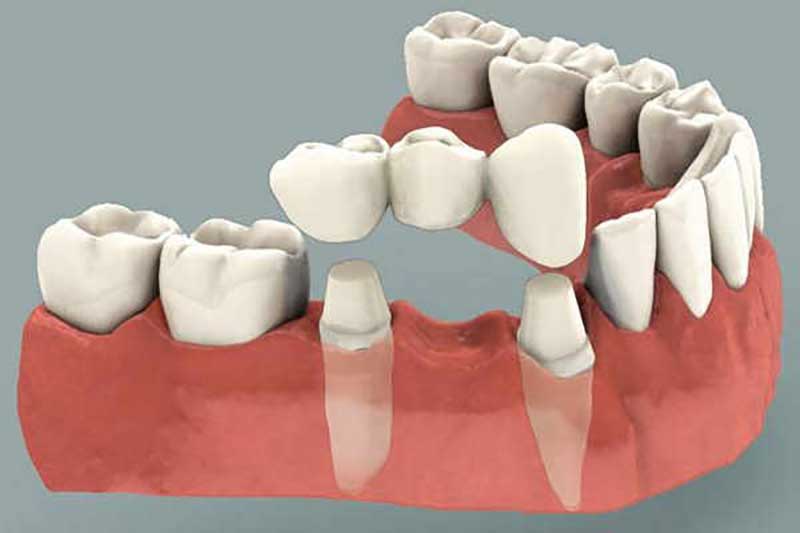
A missing tooth can affect more than the appearance of your smile. The surrounding teeth may gradually shift toward the open space, changing how your upper and lower teeth meet. You may also find it harder to chew certain foods or speak clearly. A dental bridge fills the space with one or more artificial teeth supported by nearby teeth or dental implants.
At Adams & Cheek Dentistry, we provide dental bridges in Raleigh, NC, based on each patient’s oral health, bite, and tooth replacement needs. Our dentists will examine the space, assess the surrounding structures, and explain whether a bridge or another option may be appropriate.
What Is a Dental Bridge?
A dental bridge is a fixed restoration that replaces one missing tooth or several adjacent teeth. It contains one or more artificial teeth, called pontics, supported by natural teeth or dental implants called abutments. Unlike a partial denture, a bridge remains in place and can only be taken out by a dental professional.
A traditional bridge uses crowns placed over teeth on both sides of the gap, while other bridge designs use different forms of support. Dental bridges can improve chewing and speech, restore the appearance of the smile, and help prevent nearby teeth from shifting out of position.

Types of Dental Bridges
Dental bridges come in several designs. The location of the gap, condition of nearby teeth, and amount of biting pressure help determine which type may be suitable.
Traditional Dental Bridge
A traditional bridge uses crowns placed over natural teeth on both sides of the gap. An artificial tooth, called a pontic, connects the crowns. This design can replace one tooth or a short row of missing teeth when strong supporting teeth are available.
Cantilever Bridge
A cantilever bridge attaches to a crowned tooth on only one side of the gap. Because one tooth carries the biting pressure, this design is not suitable for every area of the mouth. The dentist must carefully evaluate the supporting tooth and the forces placed on it.
Maryland Bridge
A Maryland bridge uses thin wings bonded to the backs of neighboring teeth. It requires less alteration to those teeth than a traditional bridge. Dentists often consider this design for missing front teeth because these areas generally experience less chewing pressure.
Implant-Supported Bridge
An implant-supported bridge attaches to dental implants placed in the jawbone rather than to crowned natural teeth. It may replace several consecutive missing teeth without relying on neighboring teeth. Implant placement requires oral surgery, adequate bone, and a healing period before the bridge can be attached.

Dental Bridge vs. Dental Implant
The main difference lies in how each option replaces and supports a missing tooth. A dental bridge fills the gap with an artificial tooth anchored to crowns placed over the neighboring teeth. This approach requires reshaping those teeth but usually involves a shorter timeline and no implant surgery.
A dental implant replaces the missing tooth root with a post placed in the jawbone, which then supports a crown. It does not rely on neighboring teeth but requires surgery and several months of healing. Your dentist can evaluate your oral health, jawbone, budget, and preferences to determine which option may be more appropriate.
What Happens During the Dental Bridge Procedure?
Traditional dental bridge placement usually requires at least two appointments:
- Evaluation: The dentist examines the gap, neighboring teeth, gums, and bite. X-rays may assess the roots and supporting bone. You will also discuss materials, timing, care, and other tooth replacement options.
- Tooth preparation: The supporting teeth are reshaped so crowns can fit over them. Local anesthesia helps maintain comfort.
- Impressions: Impressions or digital scans record the prepared teeth and bite. The dentist also selects a shade that coordinates with nearby teeth.
- Temporary bridge: A temporary restoration protects the prepared teeth while the dental laboratory creates your bridge. Avoid hard or sticky foods during this period.
- Final placement: The dentist checks the bridge’s fit, shape, color, and bite before bonding it in place.
Implant-supported bridges require a longer timeline because the implants must heal within the jawbone before attachment.
Recovery and Adjusting to a Dental Bridge
Most patients can return to their usual routine shortly after a traditional bridge appointment. The teeth and gums may feel mildly sensitive after the supporting teeth are prepared or the final bridge is placed.
Your new bridge may initially feel unfamiliar when you chew or speak. This sensation often becomes less noticeable as your mouth adapts. Eating softer foods and chewing carefully may help during the first few days.
Contact the dental office if:
- Your bite feels uneven
- The bridge moves or feels loose
- Sensitivity becomes more intense
- You experience ongoing discomfort while chewing
- Your gums remain swollen or begin bleeding
- The bridge develops a visible chip or crack
Early evaluation can help the dentist identify whether the bridge or bite needs adjustment.
How Long Do Dental Bridges Last?
Dental bridges commonly remain functional for approximately five to 15 years, although their longevity varies. Some bridges serve patients for longer with consistent home care and regular professional examinations.
Factors that can influence lifespan include:
- The strength of the supporting teeth
- The fit and material of the bridge
- Daily brushing and flossing
- Gum health
- Decay beneath the supporting crowns
- Teeth grinding or clenching
- Frequent chewing of hard objects
- Routine dental visits
A bridge will not develop a cavity, but the natural teeth beneath its crowns remain vulnerable to decay. Gum disease can also weaken the tissues and bone supporting those teeth. This makes ongoing preventive care important.


How to Care for Your Dental Bridge
A bridge requires the same daily attention as natural teeth, along with careful cleaning beneath the pontic. Food particles and plaque can collect where the artificial tooth meets the gums.
To care for your bridge:
- Brush twice daily with fluoride toothpaste and a soft-bristled toothbrush.
- Clean between your teeth every day.
- Use a floss threader, interdental brush, or another recommended tool beneath the pontic.
- Pay close attention to the gumline around the supporting crowns.
- Avoid chewing ice, pens, and other hard objects.
- Ask about a night guard if you grind or clench your teeth.
- Attend routine examinations and professional cleanings.
The dental team can demonstrate how to guide floss beneath the bridge. If one cleaning method feels difficult, ask about alternative tools suited to the shape and location of your restoration.
Paying for Dental Bridges in Raleigh
The cost of a dental bridge varies according to the number of missing teeth, bridge design, materials, supporting structures, and any preparatory care required. An examination allows the dental team to develop a care plan and provide an estimate based on your needs.
Adams & Cheek Dentistry offers an in-house Dental Care Savings Program for patients without a traditional dental plan. Members receive included preventive services and a 15% discount on listed in-office services, including crowns and bridges. The program is not a dental insurance product, and its benefits are available only at Adams & Cheek Dentistry.
Pay-over-time financing through Sunbit is also available. Eligibility and payment terms depend on the financing provider. Our team can discuss payment arrangements and answer questions before you begin care.

Frequently Asked Questions About Dental Bridges
Can a dental bridge replace more than one tooth?
Yes. A bridge may replace one tooth or several neighboring teeth. The number that can be replaced depends on the location of the gap and the strength of the supporting teeth or implants.
Is getting a dental bridge painful?
Local anesthesia helps keep you comfortable while the supporting teeth are prepared. Mild gum tenderness or tooth sensitivity may occur afterward, but it often eases as the area settles.
Can I eat normally with a dental bridge?
Once you have adjusted to your bridge, you should be able to eat a varied diet. Avoid biting hard objects or using the bridge to open packaging, as these habits can damage the restoration.
Can food become trapped beneath a bridge?
Food particles can collect beneath the pontic. Daily cleaning with a floss threader, interdental brush, or another recommended aid helps control plaque and support gum health.
What happens if a bridge becomes loose?
Do not attempt to reattach it at home. Keep the area clean, avoid chewing on that side, and contact the dental office. A dentist will examine the bridge and supporting teeth to determine the next step.
Find Out Whether a Dental Bridge Is Right for You
If a missing tooth is affecting your smile or ability to chew, a dental bridge may provide stable, fixed support. Adams & Cheek Dentistry offers dental bridges in Raleigh, NC, with recommendations based on your oral health and long-term needs.
Contact our office at (919) 866-1360 or schedule an appointment online to discuss your tooth replacement options.
No Insurance? No Problem!
At Adams and Cheek Dentistry, we have listened to our patients and understand the need for an affordable alternative to dental insurance. To help all of our valued patients have a choice with access to the same excellent level of dental care, we are now offering our own DENTAL CARE SAVINGS PROGRAM. This is not dental insurance and your program benefits are only available for use with us here at Adams and Cheek Dentistry.
Patient Information
We know that your time is very valuable to you. In order to allow for the fastest processing during your initial visit to our office we request that you take the time to fill out these forms in the comfort of your own home.